

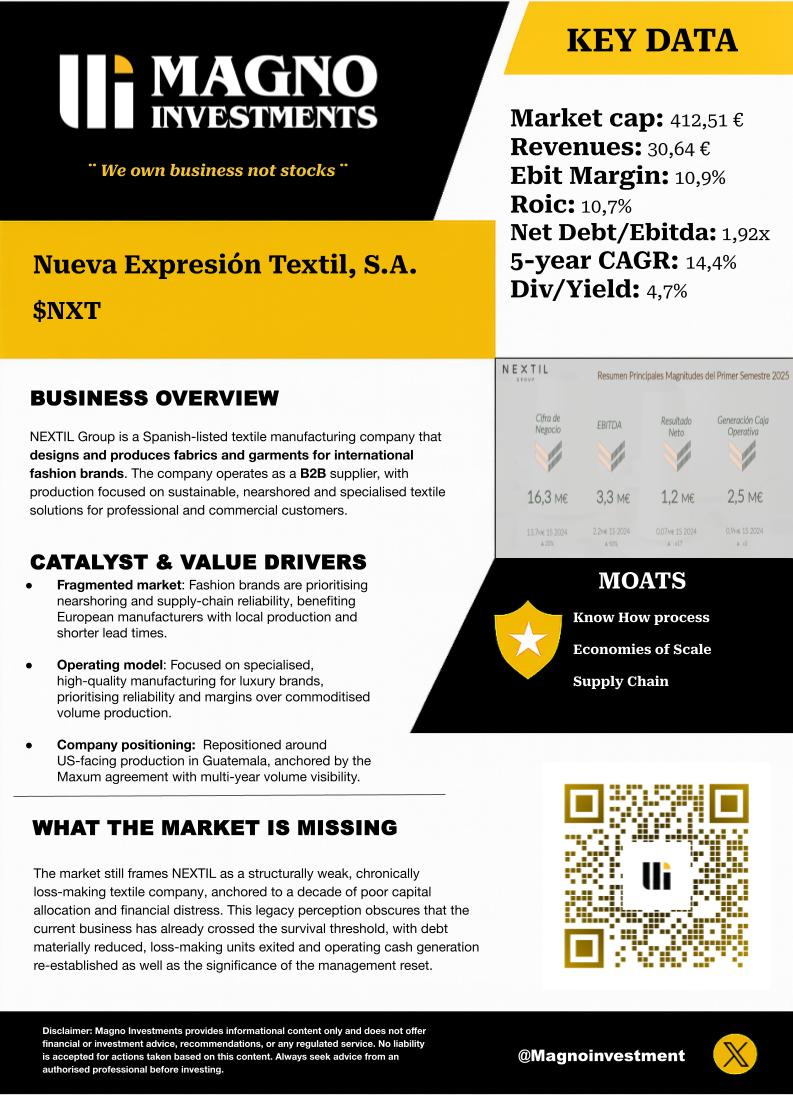
1️⃣Investment idea of the week
2️⃣Charts of the Week
This week, markets have turned markedly volatile, trading with a clear risk-off bias as investors assess the implications of the recent escalation involving Israel, the United States and Iran. The geopolitical backdrop has injected a new layer of uncertainty into an already fragile macro environment.⚠️🛢️

Against this backdrop, broader structural signals are also flashing caution as two signals point in the same direction: record concern over excessive corporate capex and elevated financial leverage. The combination suggests we may be operating in a mature phase of the cycle, where optimism has already been largely priced in. 🌍📉
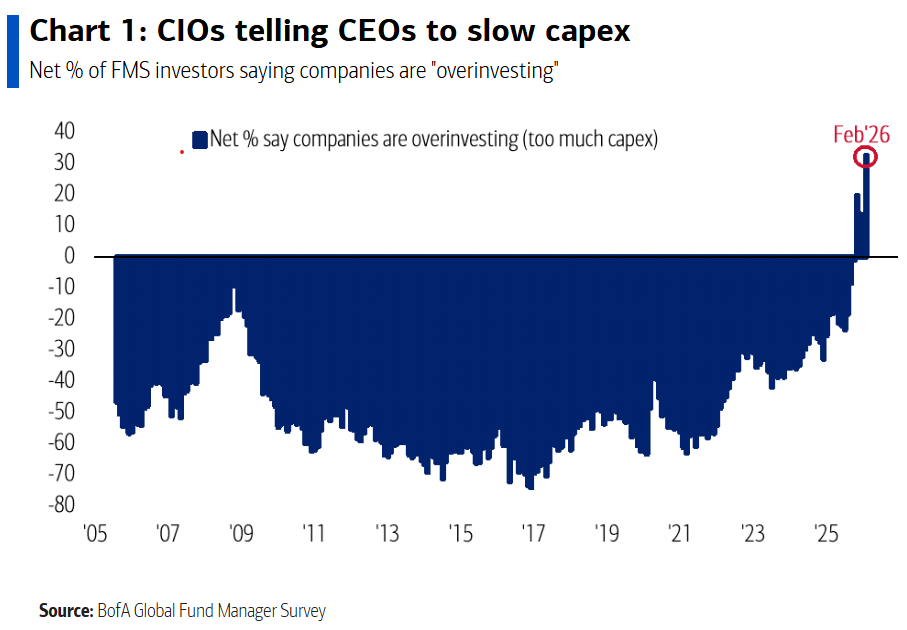
The BofA Fund Manager Survey shows a sharp rise in the net percentage of investors who believe companies are “overinvesting”. Historically, this shift occurs when confidence is high, financing is easy, and boards feel comfortable accelerating expansion. However, aggressive capital expenditure at cycle peaks often precedes periods of earnings normalization and multiple compression. 🏭📊
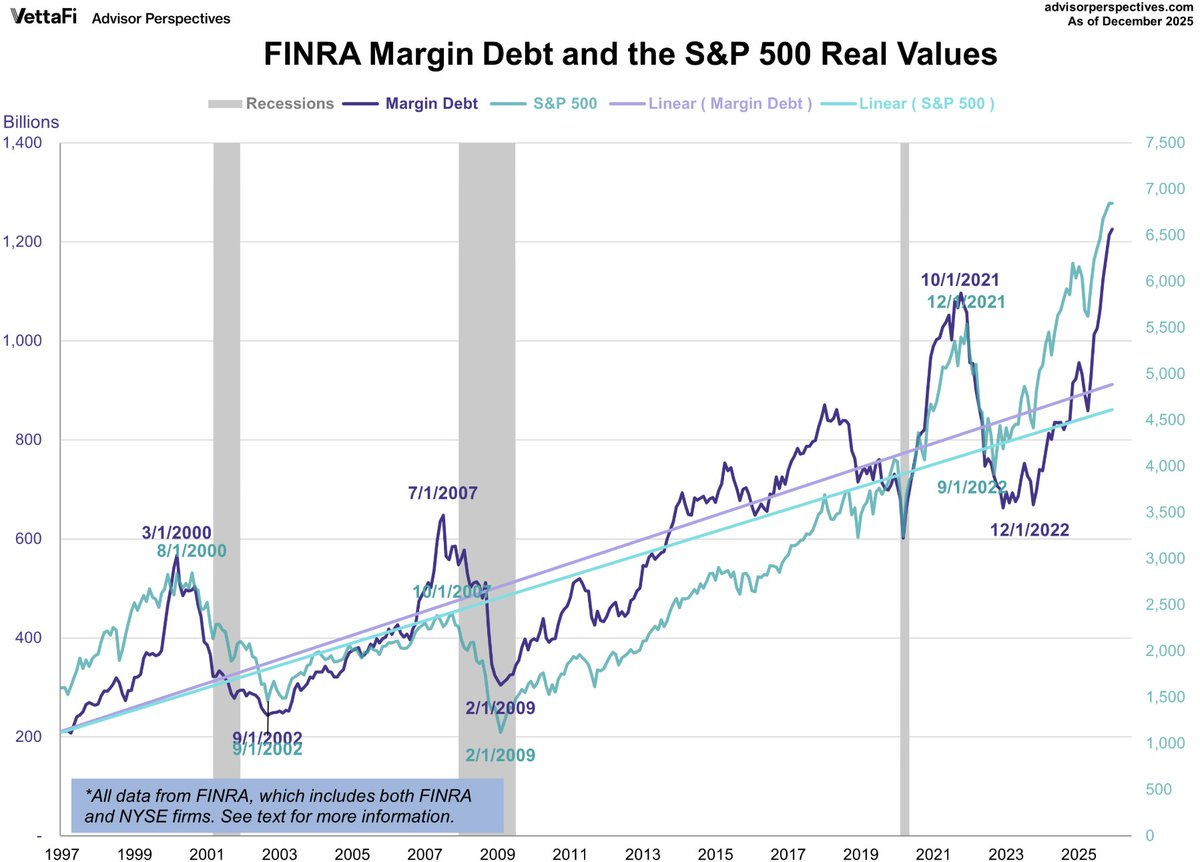
At the same time, margin debt remains structurally elevated relative to history and closely tracks equity market peaks (2000, 2007, 2021). Rising asset prices tend to encourage leverage; leverage, in turn, amplifies both gains and fragility. When valuations are extended and borrowing is high, the system becomes more sensitive to negative surprises.
Viewed together, these charts describe the same dynamic: corporations are expanding balance sheets through capex, while investors are expanding risk through leverage. That dual expansion typically characterizes late-cycle phases rather than early bull markets. 🤝📉
The market’s uneasy tone this week reflects that reality, more than ever we face a reduced margin for error in an tough environment.
3️⃣Articles of the Week
As always, here are a couple of articles I found this week particularly interesting and constructive.
Citrini | @citrini
This article has gained massive traction this week across financial and macro circles.🔥
• The piece outlines a 2028 scenario where rapid AI adoption leads to large-scale white-collar job displacement, collapsing consumer demand, corporate earnings, and ultimately financial markets.
• It argues that extreme productivity gains from AI could destabilize the economy, as machine output replaces human income, triggering a negative feedback loop of layoffs, weaker demand, and systemic financial stress.

Interesting Ideas | @4interestingideas
• The piece presents a structured “multi-bagger checklist” applied to OLN (Olin Corporation), arguing that deeply cyclical companies can generate outsized returns when bought at cycle trough valuations with improving fundamentals.
• It highlights cost leadership, industry consolidation, balance sheet resilience, and cash flow normalization potential, suggesting asymmetric upside if earnings revert toward mid-cycle levels.

I hope you find the content useful.😀
May the investment be with you.
Magno Investments Research
⚠️ DISCLAIMER | LEGAL ADVICE⚠️
Magno investments is not an entity authorised or supervised by any financial authority and does not provide investment services or regulated financial advice.
All material provided (articles, presentations, theses, ideas, opinions and analyses) are for informational and educational purposes only and does not constitute a recommendation to buy, sell or hold financial instruments, nor does it constitute personalised advice
Magno Investments Research are not responsible for the use made of this information or the veracity of its sources.
Magno Investments and/or its writer and contributors may hold, directly or indirectly, positions in the securities mentioned in the content. These positions may be changed at any time without prior notice.
Before investing in a real account, it is necessary to have the appropriate training or otherwise delegate this task to a professional duly authorized to do it. Magno Investments is not responsible for the use that members make of the information or for any losses arising from their investments.