


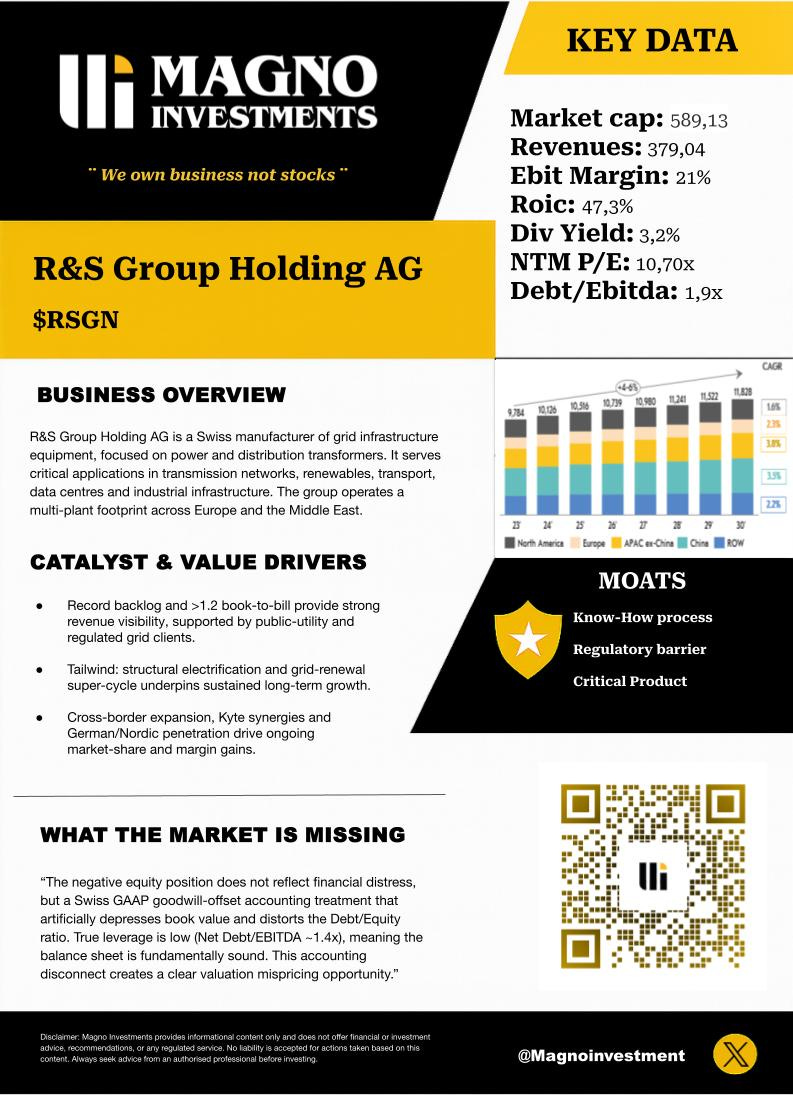
1️⃣Investment idea of the week
2️⃣Charts of the Week
This week has been dominated by the escalation of the Iran conflict and its direct impact on oil and global markets.
The geopolitical event is now evolving into a structural macro shock, with Brent crude surging sharply as markets price supply disruptions in key routes like the Strait of Hormuz. We are facing a real repricing of global risk and inflation expectations.⏳📉
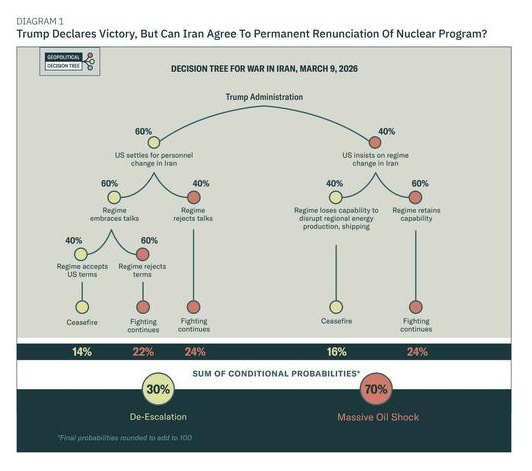
Source: Geopolitical Futures Graphic / Decision Tree
The first chart highlights a critical point: the conflict is not binary, but probabilistic, and most paths lead to continued tension. Even in moderate scenarios, disruption persists, while more adverse outcomes point toward a “massive oil shock” with high probability (~70%).
Markets are clearly aligning with this skew, pricing not peace but prolonged instability and energy stress. 🔍📊
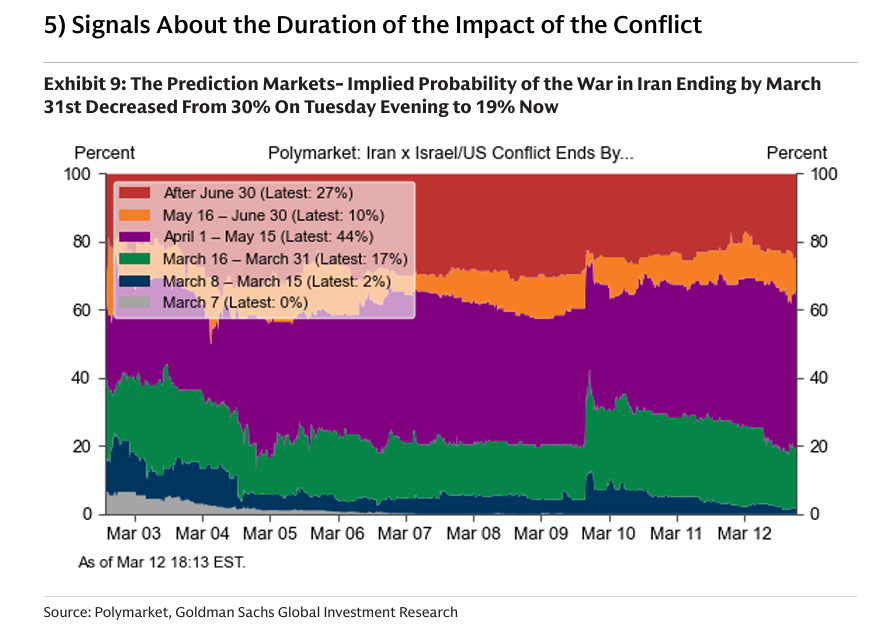
The second chart reinforces this by showing how expectations of a quick resolution have collapsed, with probability shifting toward longer timelines. This matters because duration transforms a shock into a regime: a short conflict creates volatility, a prolonged one creates macro change.
The market is now pricing the latter.
As a result, stagflation is becoming the dominant narrative. Higher oil feeds inflation while simultaneously weakening growth, a combination already highlighted by institutional research . This environment is toxic for risk assets and explains the ongoing equity weakness, where selloffs persist without clear capitulation signals. 📉🔥
In this environment, capital is rotating decisively. Energy, commodities, gold and defensive sectors are leading, while cyclical and growth assets lag behind.
The key message is simple, this is a structural shift in the macro landscape.🌍
3️⃣Articles of the Week
Fianally, here you will find two articles I found particularly interesting and constructive for this week.
Floebertus | @floebertus
• Core advantage lies in focusing on short-duration projects, enabling faster capital recycling, stronger margin control and higher flexibility compared to peers locked into long-term contracts.
• Resilience to inflation comes from its specific cost structure and contractual protections, showing that outcomes depend more on company fundamentals than on the sector itself.

Alexander | @slowcompounding
• Network effect moat is driven by increasing parcel density, which lowers unit costs and improves service, reinforcing dominance over time.
• Investment thesis shift from long-term compounder to a valuation and potential corporate action story, creating tension between intrinsic value and market pricing.

I hope you find the content useful.😀
May the investment be with you.
Magno Investments Research
⚠️ DISCLAIMER | LEGAL ADVICE⚠️
Magno investments is not an entity authorised or supervised by any financial authority and does not provide investment services or regulated financial advice.
All material provided (articles, presentations, theses, ideas, opinions and analyses) are for informational and educational purposes only and does not constitute a recommendation to buy, sell or hold financial instruments, nor does it constitute personalised advice
Magno Investments Research are not responsible for the use made of this information or the veracity of its sources.
Magno Investments and/or its writer and contributors may hold, directly or indirectly, positions in the securities mentioned in the content. These positions may be changed at any time without prior notice.
Before investing in a real account, it is necessary to have the appropriate training or otherwise delegate this task to a professional duly authorized to do it. Magno Investments is not responsible for the use that members make of the information or for any losses arising from their investments.
Thanks for mentioning!